Reading Climate Emergency Response 2025-2030
Bringing a Town Together to Shape its Climate Future: Reading Climate Emergency Response
The Challenge
The Reading Climate Change Partnership (RCCP) wanted to develop its 2025-2030 Climate Emergency Strategy in a way that reflected the aspirations, experiences and knowledge of the people who would ultimately help deliver it.
Reaching net zero requires action from far more than local government. Businesses, schools, communities, public services, environmental organisations and residents all have a role to play.
The challenge was to bring those different parts of Reading together to create a strategy that was ambitious, practical and widely owned across the town.
Our Approach
Dialogue Matters designed an integrated co-creation process combining youth engagement, stakeholder dialogue, systems thinking and wider public participation.
The process included:
-
Two youth engagement activities involving young people aged 8-25
-
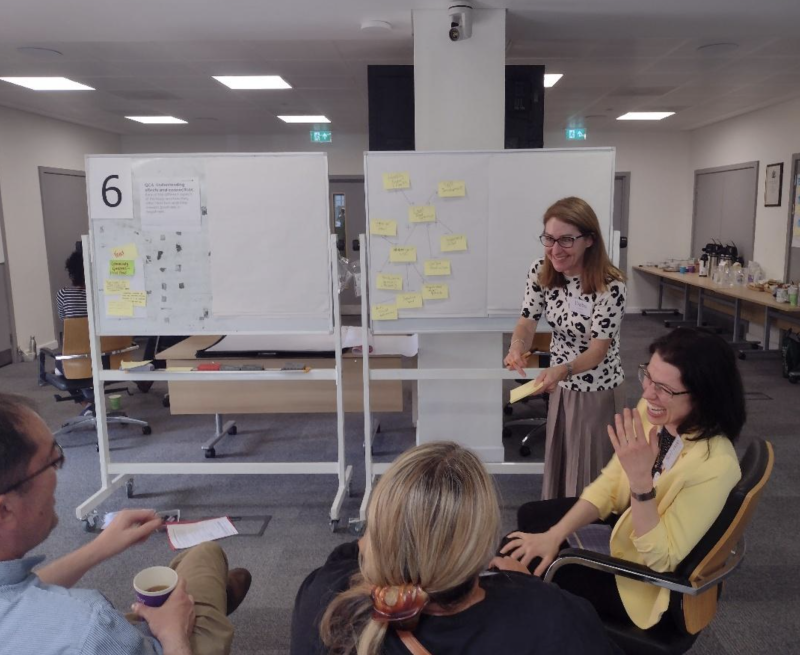
Three large stakeholder workshops
-
Training volunteer facilitators from Coaching Reading
-
Representation from 11 sectors
-
Wider engagement through surveys and discussion packs
-
Systems thinking and futures-thinking techniques
-
Testing and refining priorities throughout the process
More than 350 people contributed, bringing together sectors and communities that do not always work together on climate action.
The process began with young people developing a vision for Reading’s future. Their ideas helped frame subsequent discussions in the stakeholder group, with emerging priorities tested through wider engagement and brought back to stakeholders for refinement.
The Outcome
The process produced:
-
A co-created vision for Reading’s future
-
Agreed climate priorities
-
Shared action proposals
-
A directory of offers and commitments from participants
-
Stronger relationships between organisations and communities
The resulting strategy was grounded in ideas that had been collectively developed, tested and refined throughout the process.
Impact
The process strengthened relationships, built goodwill and created momentum for delivering the strategy.
RCCP began reviewing its own structures and processes to become more agile, while new opportunities for collaboration emerged between RCCP, partner organisations and other stakeholders.
Participants made offers of support and continued to progress actions developed through the workshops, with partnerships forming around Reading’s journey towards net zero.
“Overall, the process has strengthened relationships, built goodwill, and sparked many offers of support for the next steps…”
Why It Worked
Young people helped frame Reading’s long-term future from the outset, while people from across the town brought different knowledge, experiences and capacities for action.
Consensus building and systems thinking helped participants explore what was already working, where progress was stuck and what could unlock further change.
RCCP took part as an equal stakeholder – sharing its knowledge while listening to others. This built mutual understanding and helped people move from imagining Reading’s future to identifying practical actions and making their own offers of support.
Key learnings
Young people bring valuable long-term thinking to decisions about the future – because it is their future
Systems thinking helps people see connections and identify where change can have greater effect
Place-based climate action needs contributions from across a whole community, not just local government
Moving from ideas to offers and commitments helps build momentum for implementation
Awards
The project won the 2025 CIEEM Best Practice Award for Stakeholder Engagement